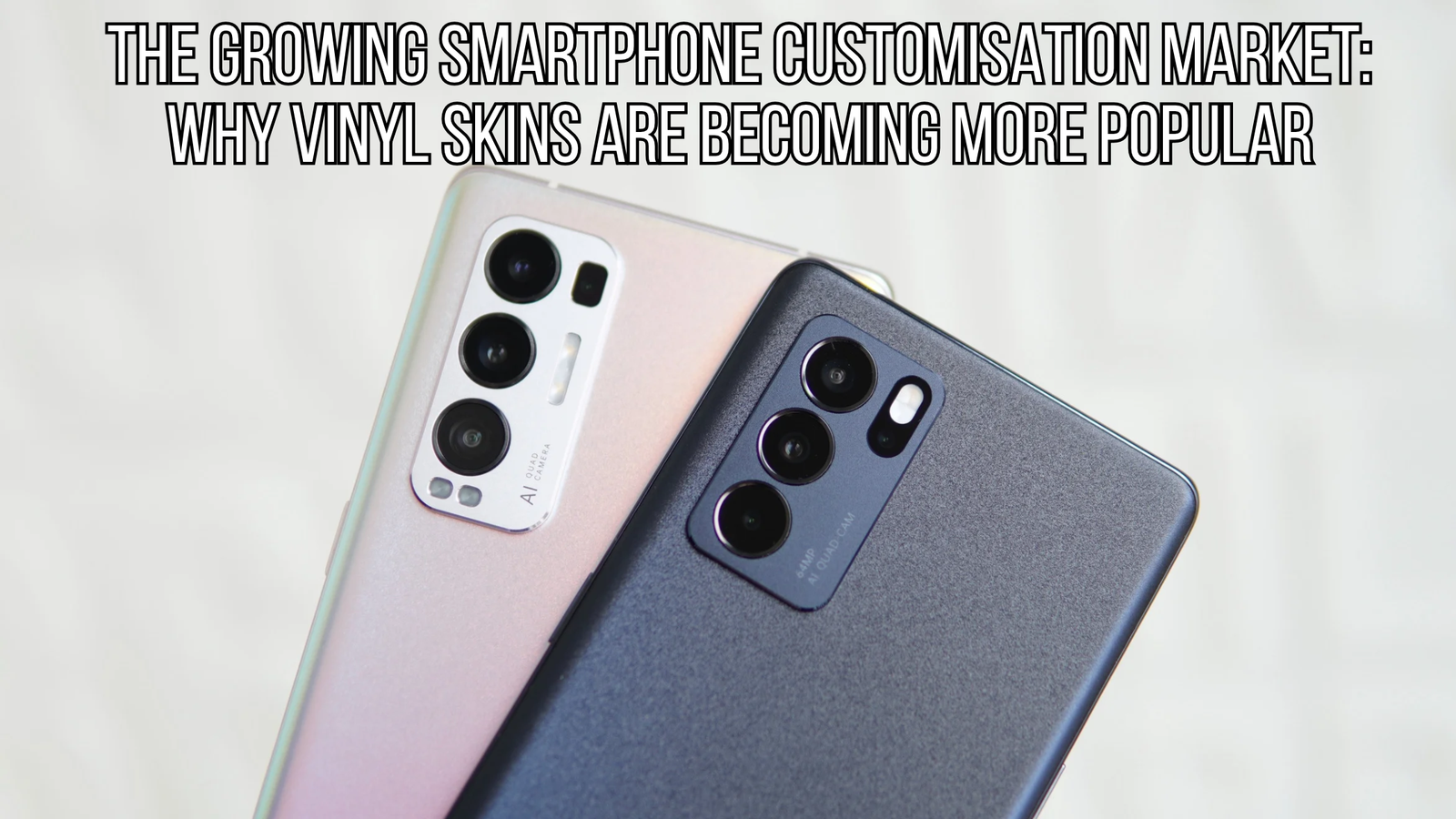

Smartphones have become an essential part of everyday life, but consumers increasingly want their devices to reflect their personal style. Beyond choosing a phone’s colour or finish, many users now look for ways to customise its appearance with unique patterns, textures, and designs.
Traditional protective cases remain popular, but vinyl smartphone skins offer another way to personalise a device without adding the bulk of a conventional case. These thin adhesive coverings are available in different colours, textures, finishes, and printed designs, making them attractive to individual users, graphic designers, and mobile accessory businesses.
The growing interest in smartphone personalisation is creating opportunities across the mobile accessories industry. Improvements in vinyl materials, digital design software, and cutting technology are also making custom skin production more accessible.
Why Is Smartphone Customisation Becoming More Popular?
Smartphone manufacturers regularly introduce new devices with updated designs, camera arrangements, and finishes. However, many devices still share similar visual characteristics. As a result, consumers are exploring ways to make their smartphones look different.
Personalisation allows users to choose designs that match their interests, preferences, and lifestyles rather than relying entirely on standard factory finishes or mass-produced accessories.
Several factors are contributing to this trend:
- Personal expression: Users can select colours, patterns, artwork, and textures that reflect their individual preferences.
- Lightweight customisation: Thin vinyl coverings can change a phone’s appearance without adding the bulk of most protective cases.
- Design variety: Matte, glossy, metallic, brushed-metal, and carbon-fibre-style finishes provide different visual options.
- Alternative to conventional accessories: Skins offer another way to customise a smartphone while retaining much of its original shape.
- Business opportunities: Customisation services allow small businesses to serve customers looking for distinctive mobile accessories.
As interest in personalised technology accessories grows, smartphone skins are becoming an interesting segment of the wider mobile customisation market.
See also: A Solo Quest, On Your Schedule: How Conversational RPGs Reimagine Tabletop Play
What Are Vinyl Smartphone Skins?
Vinyl smartphone skins are thin adhesive coverings designed to fit selected external surfaces of compatible mobile devices. They are generally made from specialised vinyl materials that can be cut into shapes matching the dimensions and design features of a particular smartphone.
Unlike conventional phone cases, which usually surround a device, vinyl skins cover specific exterior surfaces. Depending on the design, they may include carefully positioned openings for camera modules, flash units, sensors, logos, and other physical features.
The accuracy of a smartphone skin depends heavily on its design and cutting template.
Professional skin manufacturers often use digital vector graphics to create outlines for individual smartphone models. These designs can be prepared in formats such as SVG, DXF, CDR, and AI, depending on the cutting equipment and design software being used.
A properly prepared template helps improve cutting consistency, reduce manual measurements, and make repeat production easier.
How Digital Cutting Technology Is Changing Smartphone Skin Production
Digital cutting technology has transformed the way custom smartphone skins can be produced.
Traditional production methods often involve manual measuring, tracing, and trimming. Although these techniques can still be useful for certain projects, digital cutting provides a more repeatable process for producing model-specific designs.
A typical smartphone skin production workflow involves the following stages.
1. Identify the Exact Smartphone Model
The first step is identifying the correct smartphone model and variant.
Devices from the same manufacturer may look similar but have different dimensions, camera layouts, button positions, and body shapes. Even small differences can affect the accuracy of a vinyl skin.
A cutting template designed for one model should not automatically be assumed to fit another.
2. Prepare the Vector Cutting Design
After identifying the device, the appropriate digital cutting layout is selected or prepared.
Vector outlines define the shape, dimensions, edges, and openings required for the skin. The design must be compatible with the intended cutting software and machine.
Accurate vector preparation is important because errors in the digital layout can lead to misaligned openings or poorly fitted edges.
3. Select Suitable Vinyl Material
Material selection affects the appearance, application, and performance of a smartphone skin.
Common options include:
- Matte vinyl
- Glossy vinyl
- Brushed-metal-style vinyl
- Carbon-fibre-style vinyl
- Textured vinyl
- Printed decorative vinyl
Manufacturers should consider material thickness, flexibility, adhesive properties, surface compatibility, and the intended application before beginning production.
4. Cut the Vinyl Design
Once the vector file is prepared, it can be imported into compatible cutting software.
A suitable cutting plotter then follows the digital outlines to cut the selected vinyl material. Cutting pressure, blade condition, material positioning, and machine settings all influence the final result.
Correct settings help produce clean edges and accurate openings.
5. Inspect and Apply the Finished Skin
After cutting, the finished design should be checked for:
- Accurate dimensions
- Correct camera and sensor openings
- Clean cutting edges
- Consistent shapes
- Material defects
The skin can then be applied according to the vinyl manufacturer’s installation instructions. Proper surface preparation and careful application help reduce bubbles, wrinkles, and alignment problems.
This digital workflow is particularly useful for businesses producing custom smartphone skins in different designs and quantities.
Why Model-Specific Smartphone Skin Templates Matter
Device compatibility is one of the most important considerations in professional smartphone skin production.
Two smartphones may appear almost identical, but differences in camera placement, flash openings, microphones, side buttons, and body dimensions can affect how a vinyl skin fits.
Using an unsuitable cutting design may result in:
- Misaligned camera openings
- Incorrect button cutouts
- Exposed areas
- Uneven edges
- Wasted vinyl material
- Additional production time
Model-specific smartphone skin templates help address these challenges by providing predetermined digital outlines for compatible devices.
For designers, vinyl cutters, and customisation businesses, organised digital template libraries can simplify the process of finding cutting designs for different smartphone models.
Businesses and individuals looking for digital cutting resources can explore the ARMobileSkin smartphone skin template collection. The website provides digital template resources intended to support vinyl cutting projects and device customisation.
Before using a template, customers should always check its supported model, included design coverage, and available file formats.
Smartphone Skins vs. Traditional Phone Cases
Smartphone skins and conventional phone cases both allow users to change the appearance of their devices, but they serve different purposes.
Traditional phone cases are generally designed to provide a physical covering around a smartphone. Depending on their construction, they may use silicone, plastic, rubber, leather, or other materials.
Vinyl skins are primarily intended for surface customisation and appearance.
| Feature | Traditional Phone Cases | Vinyl Smartphone Skins |
| Main purpose | Physical covering and, depending on design, impact protection | Appearance and surface customisation |
| Thickness | Usually thicker | Usually very thin |
| Weight | Adds some weight | Generally adds very little weight |
| Design options | Available in different colours, materials, and styles | Available in numerous colours, textures, and printed designs |
| Coverage | Usually surrounds or covers multiple sides of a device | Covers selected external surfaces |
| Installation | Usually fitted around the phone | Carefully applied to compatible surfaces |
| Device compatibility | Depends on case dimensions and model | Depends on the accuracy of the cutting template |
Neither option is automatically better. The right choice depends on the user’s preferences, device usage, and protection requirements.
Importantly, decorative vinyl skins should not be considered a replacement for impact-resistant phone cases. Most are designed primarily for appearance and surface customisation rather than drop protection.
Business Opportunities in the Smartphone Skin Industry
The smartphone customisation market offers potential opportunities for entrepreneurs interested in mobile accessories.
Unlike businesses that focus exclusively on manufacturing conventional phone cases, smartphone skin businesses can concentrate on digital design, vinyl cutting, printing, custom artwork, and installation services.
Several business models are possible.
Personalised Smartphone Skin Production
Businesses can create customised designs using customer-selected colours, artwork, names, patterns, and finishes.
This approach allows customers to request designs that may not be available through standard accessory retailers.
Bulk Skin Production
Small production facilities can prepare vinyl skins for mobile accessory shops, repair centres, retailers, and other customisation businesses.
Having access to accurate digital templates can help make repeat production more organised.
Online Customisation Stores
E-commerce businesses can display different skin designs and allow customers to select compatible smartphone models.
A well-organised product catalogue can make it easier for customers to find suitable options.
Professional Vinyl Cutting Services
Operators with compatible cutting equipment can offer cutting services to designers, retailers, and other businesses that need accurately shaped vinyl designs.
Vector Design and Artwork Services
Graphic designers can create original artwork and prepare vector layouts for compatible smartphone models. These services may include custom patterns, branded graphics, and decorative designs.
Success in this sector depends on understanding model compatibility, vector design, material selection, cutting equipment, production costs, and customer demand.
Using Cricut and Silhouette Machines for Smartphone Skin Projects
Desktop cutting machines have made vinyl customisation more accessible to independent designers and small businesses.
Machines from brands such as Cricut and Silhouette are commonly used for vinyl projects, including stickers, labels, decorative graphics, and selected smartphone skin applications.
However, owning a cutting machine is only one part of the production process. Users also need suitable vector designs, compatible vinyl materials, and appropriate cutting settings.
Several file formats are commonly used in digital cutting workflows:
- SVG: A scalable vector format widely used in graphic design and cutting applications.
- DXF: A vector-based format commonly supported by CAD-related software and some cutting workflows.
- CDR: The CorelDRAW document format used in graphic design and vector editing.
- AI: The Adobe Illustrator format used for professional vector artwork.
Software and machine compatibility can vary. Not every cutting application supports every format directly, so users should check the requirements of their equipment before purchasing or importing a cutting file.
For more consistent results, the digital design should also be checked for correct dimensions, closed paths where required, and properly positioned cutouts.
Smartphone Customisation Trends to Watch
Smartphone customisation continues to evolve alongside changes in consumer preferences, vinyl materials, and mobile device designs.
Several trends may influence the future of this market.
Premium and Minimalist Finishes
Matte black, brushed-metal effects, subtle textures, and leather-inspired finishes appeal to users who prefer a clean and understated appearance.
Personalised Artwork and Graphics
Custom names, initials, illustrations, photographs, and original artwork allow customers to create more individual designs.
Carbon-Fibre-Inspired Designs
Carbon-fibre-style patterns remain an option for users who prefer a technical or performance-inspired appearance.
Artistic and Printed Smartphone Skins
Abstract artwork, geometric patterns, colourful illustrations, and themed graphics offer additional ways to personalise mobile devices.
Expansion Across Smartphone Brands
As manufacturers introduce new smartphone models and variations, skin producers may expand their template collections to cover a wider range of devices.
Businesses that combine accurate cutting designs with appealing visual concepts may be better positioned to serve customers looking for personalised accessories.
Challenges Faced by Smartphone Skin Manufacturers
Although the smartphone skin industry offers opportunities, manufacturers must also manage several practical challenges.
Model compatibility: Different smartphone models require suitable cutting layouts. Similar-looking devices should not be treated as interchangeable without checking their dimensions and design features.
Material quality: Poor-quality vinyl or unsuitable adhesive may affect the appearance, application, and durability of a skin.
Cutting accuracy: Incorrect vector outlines, unsuitable blade settings, or poorly positioned material can lead to rough edges and misaligned openings.
Production consistency: Businesses producing multiple designs need quality-control procedures to maintain consistent results.
Frequent device releases: New smartphone models and design changes require manufacturers to review and update their template libraries regularly.
These challenges can be managed through careful material selection, accurate digital designs, suitable cutting equipment, and regular product testing.
The Future of the Smartphone Skin Customisation Market
The future of smartphone skin customisation will likely be influenced by continued consumer interest in personalisation and wider access to digital manufacturing tools.
As cutting machines, graphic design software, and online selling platforms become more accessible, independent designers and small businesses may find new ways to enter this market.
Digital template libraries will remain an important part of the production process because accurate cutting depends on designs that match the dimensions and features of specific devices.
For manufacturers, designers, and vinyl cutting businesses, combining creative artwork with reliable production methods can create opportunities in the growing mobile accessories sector.
Smartphone skins may not replace traditional protective cases, but they offer consumers another way to customise their devices. At the same time, they support a wider ecosystem of designers, material suppliers, vinyl cutters, and mobile accessory businesses.
Frequently Asked Questions About Smartphone Skin Templates
1. What is a smartphone skin template?
A smartphone skin template is a digital cutting design created to match the dimensions and external features of a particular smartphone model. It helps users cut vinyl coverings with accurately positioned edges and openings.
2. Which file formats are used for smartphone skin cutting?
Common formats include SVG, DXF, CDR, and AI. The appropriate format depends on the cutting machine and design software being used.
3. Can Cricut machines be used to make smartphone skins?
Yes. Compatible Cricut machines can be used for certain vinyl skin projects, provided that the design, material size, machine capabilities, and cutting settings are suitable.
4. Are smartphone skins the same as phone cases?
No. Smartphone skins are generally thin adhesive coverings designed for surface customisation. Traditional phone cases usually provide a physical covering around the device and may offer additional impact protection.
5. Why are model-specific smartphone cutting files important?
Different smartphones can have different dimensions, camera positions, button layouts, and body shapes. Model-specific cutting files help improve alignment and reduce production errors.
6. Can smartphone skin customisation become a profitable business?
It can offer a business opportunity, but profitability depends on factors such as material costs, equipment investment, production efficiency, pricing, customer demand, and marketing. Entrepreneurs should research their target market before investing.
7. Where can businesses find smartphone skin templates?
Businesses can explore specialised digital template libraries such as ARMobileSkin to find resources for smartphone vinyl cutting and device customisation. They should check individual product listings for supported models and available file formats.
8. Do vinyl smartphone skins protect phones from drops?
Most decorative vinyl skins are designed primarily for appearance and surface customisation. They should not be relied upon as a replacement for protective cases designed to reduce damage from drops and impacts.
About ARMobileSkin
Digital design and cutting technology continue to create opportunities for smartphone customisation businesses. ARMobileSkin provides digital skin template resources for vinyl cutting projects involving smartphones and other devices.
By helping designers and customisation businesses access model-specific cutting resources, ARMobileSkin supports workflows for creating personalised device skins and decorative vinyl designs.
