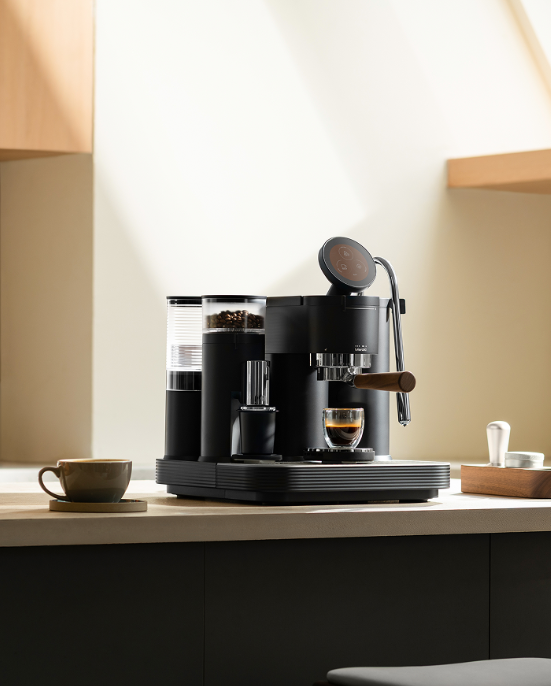

Shopping for a home espresso machine can feel like stepping into a maze. Every listing promises café-quality results, every review uses the same glowing adjectives, and prices stretch from a few hundred dollars to several thousand. The truth is less dramatic, and much more useful: the right machine is not the most expensive one, or the one with the longest feature list. It is the one that fits your kitchen, your habits, and the amount of effort you genuinely want to put into a morning cup.
Start by being honest about how you actually drink coffee. Do you make one flat white before work, or brew for two people plus friends on weekends? Do you enjoy weighing beans and adjusting grind settings, or do you want a dependable routine you can run half-asleep? A machine that rewards patience will frustrate someone who wants speed, and a machine built for speed will bore someone who loves the craft. Neither is wrong, but buying against your own habits is the most common reason a beautiful machine ends up gathering dust.
Start With Your Kitchen, Not the Spec Sheet
Before comparing boilers and pressure ratings, look at the space where the machine will live. Measure the counter, check the height under your cabinets, and think about where the water tank fills and the drip tray slides out. Some machines look compact in photos, then need several inches of clearance to open a lid or remove a tank from the back. If you must drag the machine out every morning, you will resent it within a month.
The Grinder Matters More Than the Badge
Ask experienced home baristas what transformed their coffee most, and most will point to the grinder rather than the machine itself. Espresso needs a fine, consistent grind, and small changes make a big difference to taste. A machine with a capable built-in grinder simplifies the setup, keeps the counter tidy, and removes one purchase decision. A separate grinder gives more control and an easier upgrade path later, but it costs more and takes up more room.
Either way, look for fine adjustment, a burr set that produces few fines, and a dosing method you can repeat. If you change beans often, you will want a grinder that is easy to purge and recalibrate. If you stick to one bean, consistency matters more than flexibility. Fresh beans, ground just before brewing, will do more for flavour than any gadget. That is why a guide to the Meraki home espresso machine options, or any serious buying guide, should spend as much time on grinding as on the machine itself.
Boiler design is simpler than the jargon suggests. A single boiler can brew and steam, but not at the same time, so milk drinks take longer. A dual boiler lets you brew and steam simultaneously, which matters if you make several milk drinks in a row. For a single morning coffee, a single boiler is perfectly fine. For a household of latte drinkers, dual boilers save real time and frustration.
Workflow: The Part You Live With Every Day
Workflow is where enthusiasm meets reality. Think through the whole process: filling the tank, weighing and grinding, distributing and tamping, locking in the portafilter, starting the shot, steaming milk, and cleaning up. How many of those steps feel enjoyable, and how many feel like chores you will skip? The best machine for you is one whose workflow you will actually repeat, day after day, without shortcuts that ruin the result.
Built-in scales, programmable shot volumes, and pre-infusion settings can help consistency, especially for beginners. They are not magic, though. A scale does not fix stale beans, and a timer does not replace a decent tamp. Automation should support good habits, not hide bad ones. Milk steaming deserves its own honest assessment. If you drink coffee black, a powerful steam wand is irrelevant. If you love cappuccinos, steam power and wand angle matter, and good microfoam takes a few weeks to learn on any machine.
Maintenance Is Part of the Purchase
This is the section most buyers skip, and it determines whether a machine still makes great coffee in year three. Espresso machines deal with hot water, coffee oils, milk residue, and mineral scale. All need regular cleaning, and the easier that cleaning is, the more likely you are to do it. Removable drip trays, accessible parts, and clear descaling instructions are practical virtues, not boring details.
A good routine is simple: purge and wipe the steam wand after every milk drink, rinse the portafilter and basket, empty the drip tray regularly, and clean according to the manual. Descaling frequency depends on water hardness, so if you live in a hard-water area, filtered water will protect the machine and improve taste. Reading a guide to Meraki espresso machine cleaning before you buy, whatever brand you choose, gives a realistic picture of the weekly commitment. If that routine sounds manageable, the machine is a good fit. If it sounds like a burden, a simpler machine may serve you better.
Budget Honestly, Including the Extras
Set a budget that includes more than the machine. You will need fresh beans, and possibly a better tamper, a dosing funnel, a milk jug, a scale, and cleaning supplies. Those extras add up, but they make the difference between a frustrating start and a smooth one. It is better to buy a slightly simpler machine and the right accessories than to stretch for a flagship model and brew with stale beans and a poor tamper.
Also consider service. How easy is it to get gaskets and filters? Is there a local repair option, or would a fault mean shipping the machine away for weeks? Reviews from owners who have lived with a machine for a year are far more valuable than first-week impressions.
The Bottom Line
Choosing a home espresso machine is not about finding a perfect machine. It is about finding a good match. A modest machine used daily with fresh beans and a consistent routine will beat an expensive machine used reluctantly every time. Focus on your real habits, your kitchen, your grinder, and the cleaning you are willing to do. The best machine for your home is the one that makes your mornings easier and your coffee better, not just on the first day, but on the hundredth.
