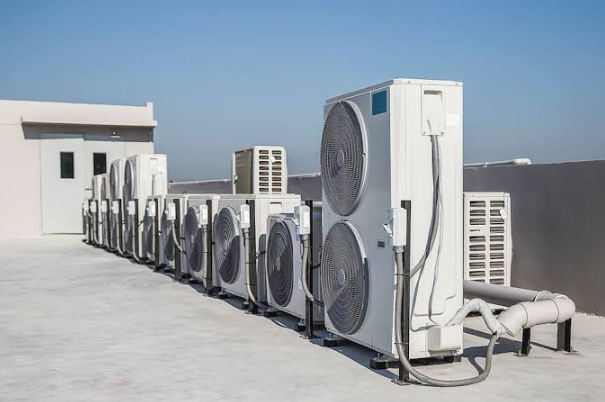

Industrial cooling is an essential part of many manufacturing and processing operations. From chemical plants and food production facilities to power generation units and commercial buildings, numerous industries depend on effective heat removal to maintain stable operating conditions. When cooling equipment performs poorly, the consequences can include higher energy consumption, production interruptions, equipment damage, and increased maintenance expenses.
Selecting an appropriate cooling system requires more than comparing equipment prices. Businesses must consider their operating temperatures, water availability, installation environment, maintenance resources, and expected production demands. Choosing a dependable supply partner is equally important because the quality of equipment selection, installation support, and replacement components can influence long-term performance.
Understanding the Purpose of an Industrial Cooling Tower
A cooling tower removes unwanted heat from circulating water by transferring it into the surrounding air. Heated water enters the tower, comes into contact with air, and releases heat through a combination of evaporation and sensible heat transfer. The cooled water then returns to the industrial process or condenser system.
Cooling towers are widely used in power plants, HVAC installations, refineries, pharmaceutical facilities, plastic processing units, and other operations that generate substantial heat. Their size and configuration depend on the amount of heat that must be rejected and the conditions under which the system will operate.
A correctly selected tower can support stable production temperatures and help equipment operate within its intended limits. However, a system that is too small may struggle during periods of high ambient temperature, while an oversized installation may increase initial costs and consume more space than necessary.
Factors to Consider Before Selecting a Supplier
Industrial cooling projects involve several technical and operational decisions. Before requesting quotations, buyers should prepare a clear description of their requirements.
Cooling Capacity and Operating Conditions
Cooling capacity is one of the most important selection criteria. Engineers generally evaluate the required water flow rate, hot-water temperature, cold-water temperature, and design wet-bulb temperature. The difference between the hot-water and cold-water temperatures is known as the range, while the difference between the cold-water temperature and ambient wet-bulb temperature is called the approach.
These measurements help determine whether a proposed tower can meet the process requirements under expected conditions. Buyers should provide realistic operating data rather than relying exclusively on general capacity descriptions.
It is also helpful to discuss seasonal temperature changes, future production expansion, and possible variations in process loads. Such information allows suppliers to recommend equipment that is appropriate for both current operations and foreseeable demand.
Equipment Design and Construction Materials
The tower’s construction materials influence durability, corrosion resistance, maintenance needs, and suitability for the installation environment. Fiberglass-reinforced plastic, galvanized steel, stainless steel, and concrete are used in different cooling tower designs.
The right choice depends on factors such as water chemistry, exposure to chemicals, ambient conditions, structural requirements, and expected service life. For example, an industrial facility handling aggressive process chemicals may need materials that offer stronger resistance to corrosion than those used in a standard commercial application.
Buyers should also examine the quality of internal components, including fill media, drift eliminators, water distribution systems, fans, motors, and access platforms. These parts affect heat transfer, water consumption, airflow, and maintenance accessibility.
Technical Guidance and Documentation
A supplier should be able to explain why a particular design fits the application’s requirements. Technical discussions should cover performance expectations, equipment dimensions, electrical requirements, foundation loads, water connections, and installation clearances.
Useful documentation may include equipment drawings, performance data, operation manuals, maintenance schedules, and recommended spare-parts lists. Clear documentation helps engineering teams plan installation and enables maintenance personnel to understand the system after commissioning.
Businesses comparing cooling tower suppliers India can use these criteria to evaluate the technical suitability of available options instead of relying on price alone.
Choosing the Right Cooling Tower Configuration
Different cooling tower configurations serve different operating conditions. Understanding their basic characteristics can help buyers narrow down suitable options.
Counterflow and Crossflow Designs
In a counterflow tower, air moves upward while water flows downward, creating opposing movement between the two streams. This arrangement can offer a compact design and is suitable for many industrial applications.
In a crossflow tower, air passes horizontally across falling water. Depending on the design, this configuration can provide convenient access to certain internal components and simplify some maintenance activities.
Neither design is automatically the best choice for every facility. Selection depends on performance requirements, available space, maintenance preferences, environmental conditions, and the proposed equipment layout.
Induced-Draft and Forced-Draft Systems
Induced-draft towers use fans positioned near the air discharge to draw air through the equipment. This configuration is common in industrial applications because it can help manage airflow and reduce the likelihood of warm, moist discharge air being drawn back into the air intake.
Forced-draft towers use fans to push air into the tower. Their suitability depends on the application, site layout, and operating requirements.
The fan arrangement also affects power consumption, noise, airflow distribution, and service access. Buyers should therefore consider the complete system rather than evaluating the fan in isolation.
Modular and Packaged Units
Packaged cooling towers are often delivered as assembled or partially assembled units, which can simplify installation for suitable projects. Modular designs can be useful where capacity needs to be expanded in stages or where transportation and site access impose limitations.
Large industrial facilities may require custom-engineered systems designed around substantial heat loads, unusual water conditions, or specific structural constraints. Early coordination between the buyer, consultant, and supplier can reduce the likelihood of costly changes during installation.
Installation Planning and Site Preparation
Even well-designed equipment can underperform if installation is poorly planned. Before delivery, project teams should confirm the foundation dimensions, structural capacity, lifting arrangements, electrical connections, water piping, drainage, and access routes.
The tower should be positioned to support adequate airflow and reduce the risk of warm, humid discharge air recirculating into the intake. Nearby buildings, walls, exhaust outlets, and other equipment can influence airflow, so site conditions deserve careful evaluation.
Noise and drift also require attention. Industrial facilities may need to comply with local noise requirements, while drift eliminators help limit the amount of water droplets carried out of the tower with the exhaust air. Proper maintenance of these components is important for controlling water loss and reducing the movement of treatment chemicals into the surrounding environment.
Commissioning should include checks of fan rotation, motor operation, water distribution, vibration, leaks, and control settings. Where appropriate, performance should be assessed against the agreed design conditions.
Maintaining Efficiency After Commissioning
Cooling tower performance can deteriorate gradually when routine maintenance is neglected. Dirt, scale, corrosion, biological growth, and damaged components may reduce heat transfer or restrict water and airflow.
A practical maintenance program should include the following activities:
- Inspect fill media and drift eliminators: Look for blockage, physical damage, and uneven water distribution.
- Check fans and motors: Monitor vibration, unusual noise, alignment, lubrication requirements, and electrical performance.
- Maintain water quality: Apply an appropriate water-treatment program to control scale, corrosion, and microbiological growth.
- Clean strainers and distribution systems: Remove debris that could obstruct nozzles or reduce water flow.
- Examine structural components: Check supports, fasteners, access platforms, and exposed surfaces for deterioration.
- Monitor operating performance: Record water temperatures, flow rates, energy use, and other relevant indicators to identify changes over time.
Water treatment deserves particular attention because cooling towers can provide conditions that support the growth of harmful microorganisms, including Legionella. Facility operators should follow applicable regulations and use a properly designed water-management program, with qualified professionals where necessary.
Maintenance frequency should reflect the operating environment, water quality, equipment design, and manufacturer’s recommendations. A consistent inspection schedule can help identify small problems before they lead to major repairs or unexpected shutdowns.
Evaluating Long-Term Value Rather Than Purchase Price
The initial quotation is only one part of the total cost of ownership. Buyers should also consider electricity consumption, water use, chemical treatment, replacement components, labour, downtime, and the expected service life of the equipment.
A lower-priced tower may become more expensive over time if it requires frequent repairs or consumes excessive energy. Conversely, a higher initial investment may be justified when the design offers better efficiency, easier servicing, or improved reliability under demanding operating conditions.
When comparing proposals, businesses should request clear information about the scope of supply, exclusions, delivery schedule, warranty terms, installation responsibilities, and after-sales support. It is also useful to establish how spare parts will be sourced and whether technical assistance will be available throughout the equipment’s operating life.
Supplier evaluation should include practical questions about previous projects, relevant industry experience, quality-control procedures, and the ability to support the proposed equipment. References from facilities with similar operating conditions can provide additional insight into real-world performance.
Preparing for Future Cooling Requirements
Industrial operations rarely remain unchanged for the entire life of a cooling tower. Production volumes may increase, processes may change, and environmental or efficiency requirements may become more demanding.
Facilities can prepare for these developments by considering future expansion during the initial design stage. Depending on the application, this may involve allowing space for additional cells, selecting modular equipment, providing suitable piping connections, or ensuring that electrical infrastructure can accommodate planned upgrades.
Monitoring systems can also support better decisions. Temperature sensors, flow measurements, vibration monitoring, and energy records help maintenance teams identify performance trends and plan servicing based on actual operating conditions.
A long-term approach to cooling system management combines suitable equipment, competent installation, water treatment, preventive maintenance, and informed supplier support. These elements work together to protect production reliability and control operating expenses.
Frequently Asked Questions
1. How can a business determine the cooling tower capacity it needs?
Capacity depends on the process heat load, circulating-water flow rate, required hot- and cold-water temperatures, and local design wet-bulb conditions. An engineering assessment using accurate operating data is the most reliable starting point.
2. How often should an industrial cooling tower be maintained?
Inspection and maintenance frequency depends on water quality, operating hours, environmental conditions, and equipment design. Routine checks should be supported by a documented preventive-maintenance schedule and an appropriate water-management program.
3. What should buyers compare when reviewing supplier quotations?
Buyers should compare verified performance, construction materials, energy and water requirements, included components, delivery arrangements, warranty coverage, installation support, spare-parts availability, and long-term service costs. A consistent technical specification makes competing quotations easier to evaluate fairly.
Conclusion
Reliable industrial cooling depends on selecting equipment that matches the process, installing it correctly, and maintaining it throughout its service life. Businesses should assess cooling capacity, construction materials, tower configuration, water-treatment needs, and site conditions before making a purchasing decision.
A careful supplier evaluation can also reduce project risks by clarifying performance expectations, documentation, warranties, and future service arrangements. By looking beyond the initial purchase price and focusing on efficiency, maintainability, and dependable technical support, industrial facilities can build cooling systems that serve their operational needs over the long term.
